
 English
 Español
 Português
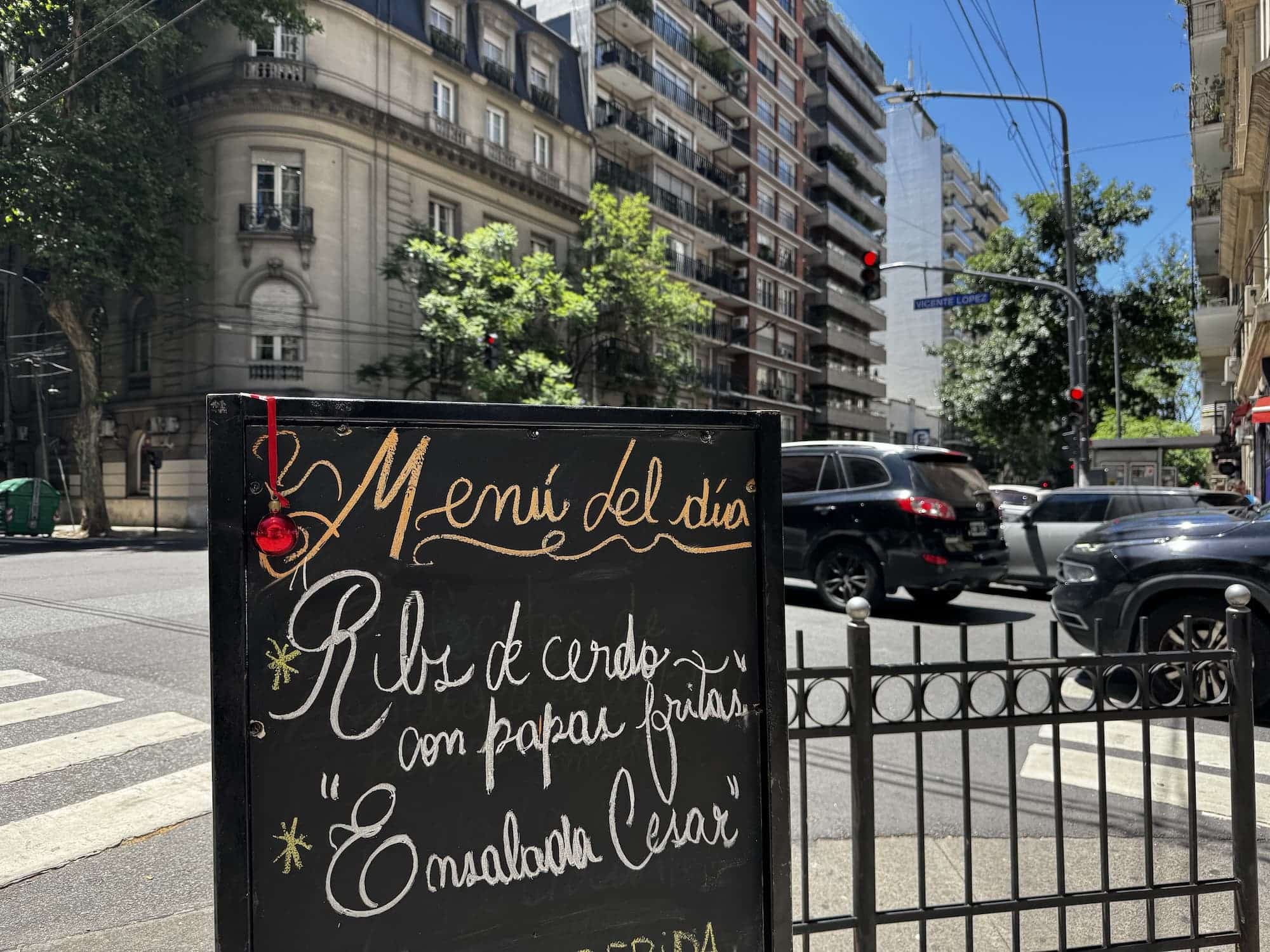
If you’ve ever been wandering the streets of Buenos Aires around lunchtime, you may have seen small signs in restaurant windows or boards on the sidewalk that say menú ejecutivo or menú del día. Most tourists just walk past, thinking it might be cheap and low-quality. That’s totally wrong.
This is actually one of the easiest ways to eat well in Buenos Aires, get more for your money, and do it like locals do. I’ll explain what it is, how it works, where to find it, and why it’s so popular with office workers. Trust me, once you know about it, you’ll start noticing it everywhere.
Search for the best food tour in Buenos Aires? Check out here.
| My Quick Recommendations for your travel to Buenos Aires!👇 🏡 Find the Best and Most Affordable Stays in Buenos Aires here! 🚗 Rental Car: The top Argentina & Budget companies are listed on this page. 📱 Connect: Stay connected, and get a 5% automatic discount, with the Argentina eSim! 💃 The Best tango show ticket prices available in Buenos Aires. |
What Is a Menú Ejecutivo Anyway?
Think of the menú ejecutivo as a fixed-price lunch that gives you a complete meal without making your wallet cry. Most restaurants offer it during lunch hours, and it usually comes with two courses plus a drink. If you go for the slightly fancier one—around 20 USD—you’ll get a starter, main dish, dessert or coffee, and a drink.
It’s not gourmet food, but it’s good quality, filling, and practical. Prices usually range from 16,000 ARS (about 10 USD) to 30,000 ARS (around 20 USD). To give you an idea, a main dish on its own might cost 16,000 ARS, but with the menú ejecutivo you get a drink and starter included. So instead of paying 30,000 ARS for a full meal, you pay 16,000 and get almost everything.
Read more: 10 Argentine foods to try when visiting the country
Who Eats the Menú Ejecutivo?
Mostly office workers. From 12 to 3 pm, the streets and cafés fill with people taking a lunch break. It’s quick, simple, and affordable—perfect for weekdays when you’re running between meetings or just want a solid meal.
But anyone can order it. Families, retirees, even tourists—it’s really easy to get and enjoy. The goal is a good lunch, nothing fancy, nothing complicated.
When to Get It
The menú del día is mostly for lunch, Monday to Friday. Weekends are usually different, with à la carte or special menus instead. The best time to show up is between 12:00 and 15:00. After that, restaurants might run out of some options, especially the popular ones.

What’s Usually on It
Every restaurant does it a little differently, but this is the typical deal:
- One or two main dishes to choose from
- A drink, usually soda, juice, or water
- For the bigger menú ejecutivo (around 20 USD), a starter and dessert or coffee
Sometimes they throw in bread. Extra water beyond your included drink costs a bit more. And yes, tipping 10% is standard everywhere in Buenos Aires, menus included.
The great thing? Even if your Spanish is basic, it’s easy. Options are usually simple—one or two dishes. You pick, you sit, you eat. Done.
Where to Find It
The menú ejecutivo is everywhere. Microcentro, San Telmo, Palermo, Recoleta—you name it.
The types of places that usually offer it:
- Bodegones: classic, hearty, old-school Argentine eateries
- Parrillas: steakhouses with meat-focused options
- Cafés: lighter options for a quick, casual lunch
Most restaurants show the menu outside or hand you a small paper with the day’s options. If you don’t see it, just ask. They’re happy to give it to you.
My favourite spots for a menu ejecutivo are
- El Trebol: Av. Sta. Fe 2198 (link Google Maps) – Budget option
- La Cava by El Querandi: Perú 322 (link Google Maps) – Best in San Telmo
- La Parolaccia (multiple locations in the city). Italian cuisine. Around 30 USD per person for 3 course dinner + drinks and a bottle of D.V. Catena wine per 2 people.
- Santos Manjares: Paraguay 938 – Steakhouse with “menu del dia”.
Why Restaurants Do This
It’s simple. Weekdays are slower during lunch, so restaurants offer a fixed menu to get steady traffic. Office workers want a good lunch without spending 30 USD every day. This makes it affordable and keeps people coming back.
It’s been around forever. As long as I’ve lived here, the menú ejecutivo has been part of everyday Buenos Aires life.

Tourist Misconceptions
Some tourists think it’s low-quality or a trap. Nope. It’s made for locals, not visitors, and it’s usually better value than ordering à la carte.
Others think it’s too complicated to order if you don’t speak Spanish. Again, not true. There are usually only one or two choices, and most restaurants will hand you the menu paper or post it outside. Easy.
Tips for Tourists
- Look for the sign: a poster in the window or a small paper inside the restaurant
- Check what’s included: some menus have dessert, coffee, or a drink
- Go at the right time: 12:00–15:00
- Neighborhoods to focus on: Microcentro, San Telmo, Palermo, Recoleta
- Just enjoy it: the meal is meant to be simple, filling, and practical

Menú Ejecutivo vs À la Carte
Ordering à la carte can be fun, but it’s more expensive. The menú ejecutivo gives you a full meal for less than the price of one main dish. It’s perfect if you want to eat like a local, save money, and not overthink your order.
Bottom Line
If you want to eat like a local in Buenos Aires, the menú ejecutivo or menú del día is a must. Walk past a restaurant, see that small paper or poster, and step inside. Choose your dish, enjoy your drink, maybe dessert, and take a proper lunch break.
It’s practical, affordable, and tasty. You’ll feel like a local in no time, and your wallet will thank you. Sometimes the best way to experience a city isn’t in fancy restaurants or tourist traps—it’s in a simple lunch with real locals.
Fixed price per vehicle · Free cancellation up to 24 h


