I went back to the Museo Argentino de Ciencias Naturales “Bernardino Rivadavia” in Buenos Aires just last month, and even though I already knew the place, it surprised me again. It’s one of those museums you can return to multiple times and always find something new. This guide is written from my own experience as a visitor, with all the practical details you need to plan your trip: hours, prices, how to get there, which halls not to miss, and tips if you’re going with kids or coming from abroad.
Last visit and update: September 2026
| My Quick Recommendations for your travel to Buenos Aires!👇 🏡 Find the Best and Most Affordable Stays in Buenos Aires here! 🚗 Rental Car: The top Argentina & Budget companies are listed on this page. 📱 Connect: Stay connected, and get a 5% automatic discount, with the Argentina eSim! 💃 The Best tango show ticket prices available in Buenos Aires. |
Quick facts before you go
- Address: Av. Ángel Gallardo 470, Parque Centenario, Buenos Aires (CABA).
- How to get there: Subway Line B, Ángel Gallardo station (about a 10-minute walk).
- Hours: Tuesday to Sunday, 2 p.m. to 7 p.m. Closed Mondays.
- Tickets: not sold in advance or online — you buy them at the box office the day of your visit. Card payment is accepted. Prices are tiered by visitor category (Argentine residents, visitors from neighboring/Mercosur countries, other foreign visitors) and get updated from time to time, so it’s worth checking the current rate on the museum’s official website before you go.
- Children under 6: free admission.
- Recommended visit length: 2 to 3 hours. Without rushing, I easily spent three.


My experience: why it’s worth going back
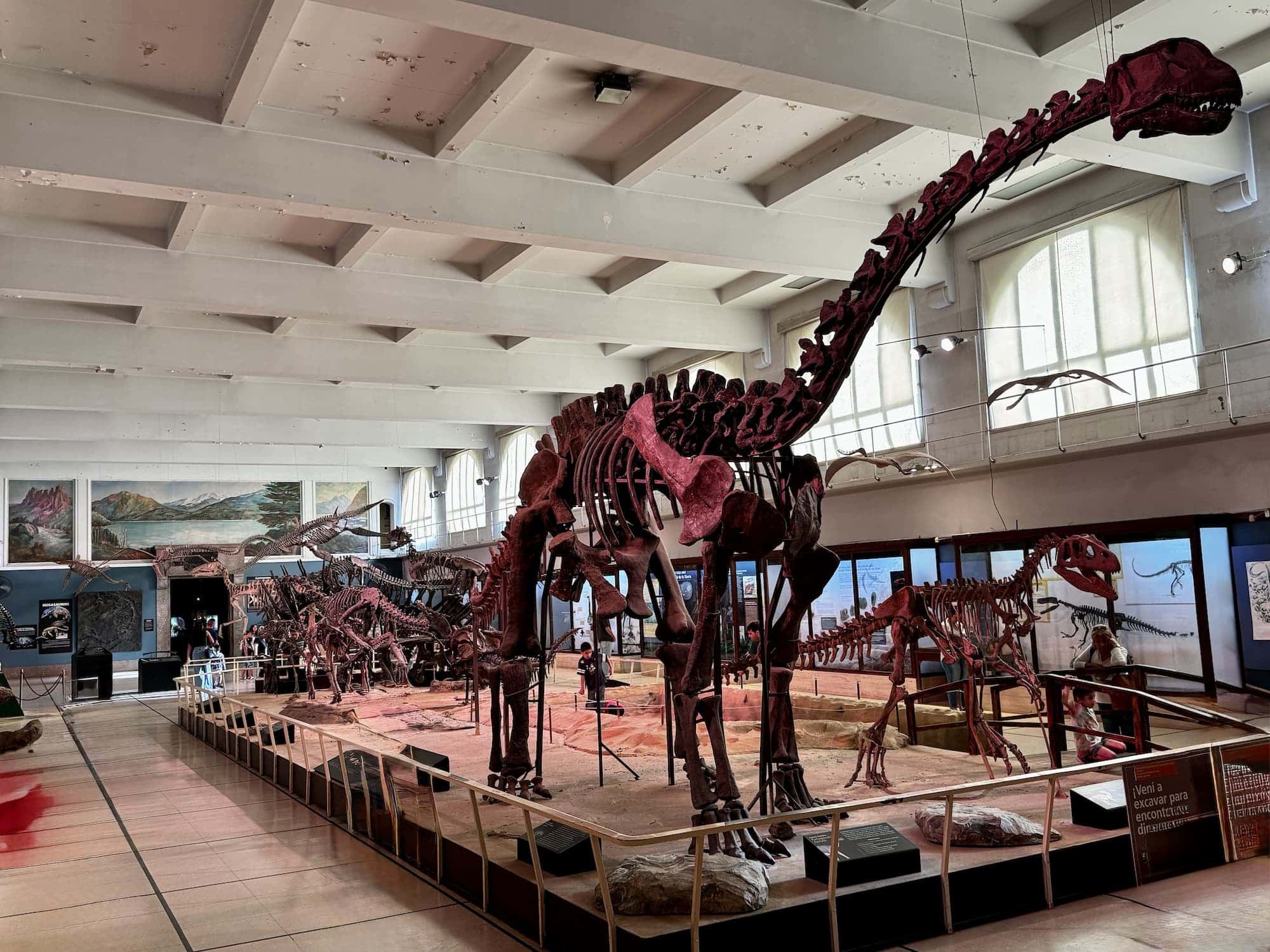
What I like most about this museum is how varied it is. It’s not just “the dinosaur museum,” even though the paleontology hall with full skeletons is by far the one that impresses adults and kids most as soon as you walk in. Argentina — and Patagonia in particular — is one of the richest regions in the world for dinosaur fossils, and it shows: the pieces on display have a scientific quality and scale that rival museums anywhere else in the world.
But after that hall, the visit opens up into a bunch of other worlds:
- A genuinely beautiful butterfly collection, with a surprising range of colors.
Halls of amphibians and reptiles preserved in formalin, great for seeing up close details you’d never get to observe so calmly in the wild. - A section dedicated to Antarctica — especially interesting given that Argentina maintains several research bases there.
- Exhibits on geology, malacology (mollusks and shells), birds, marine life, and mammals.
- Displays that tie all of this together with the history of the Earth and the evolution of nature in general.
One honest note, so the visit doesn’t catch you off guard: some halls show their age a bit, with display cases and signage that could use an update. This is a museum with an enormous scientific heritage, and it deserves some government attention and renovation to match the quality of its own collections. That said, the content and educational value are still excellent.

Visiting with kids
It’s a great plan to do with children: it combines the outdoors (Parque Centenario is right next door), dim and dramatic exhibit halls, and very visual pieces like the dinosaur skeletons or the mounted animals. A few tips that helped me:
- Explain the halls to them beforehand. The museum doesn’t have audio guides, so if kids don’t have some context going in, they’ll miss a good chunk of the information.
- Plan for 2 to 3 hours, with some buffer in case they get tired or want to revisit a favorite hall (the dinosaur room is usually the winner).
- Make use of Parque Centenario before or after your visit, especially on a sunny day. It’s a very pleasant park to take a break in, grab a bite, or let the kids run around.

Tips for visitors who don’t speak Spanish
All the signage and information inside the museum is in Spanish only. If you’re visiting from abroad and don’t speak the language, my recommendation is simple: bring a fully charged phone and use a live translation app (Google Translate’s camera feature, for example) to read the panels in each hall. Since there are no audio guides available, this is the most practical way to not miss out on the information.

Getting there and when to go
The museum sits on Av. Ángel Gallardo, right on the edge of Parque Centenario, one of the nicest parks in Buenos Aires. The easiest way to get there is by subway, Line B, getting off at Ángel Gallardo station, about a 10-minute walk from the entrance.
A few notes on timing:
- Open Tuesday to Sunday, 2 p.m. to 7 p.m. Closed on Mondays.
- You cannot buy tickets in advance or online — they’re sold only at the box office on the day of your visit.
- On weekends, especially just after midday, there can be a line outside, but it generally moves quickly.

Frequently asked questions
How much does admission to the Bernardino Rivadavia Museum cost? Prices vary by visitor category (Argentine residents, visitors from neighboring or Mercosur countries, and other foreign visitors) and are updated periodically. It’s best to confirm the current rate on the museum’s official website before your visit. Card payment is accepted at the box office.
Do children under 6 pay for admission? No, admission is free for children under 6.
Does the museum have audio guides? No. If you don’t speak Spanish, bring a charged phone and use a live translation app to read the information in each hall.
How much time should I set aside for the visit? Between 2 and 3 hours, depending on how long you linger in each hall. If you’re visiting with kids, allow enough time for them to enjoy the dinosaur hall without feeling rushed.
How do I get there by public transport? By subway, Line B, getting off at Ángel Gallardo station (about a 10-minute walk). Several bus lines also stop near Parque Centenario.
Which halls shouldn’t I miss? The dinosaur and paleontology hall (with pieces from Patagonia, one of the richest regions in the world for dinosaur fossils), the butterfly collection, the amphibian and reptile hall preserved in formalin, and the Antarctica exhibit.
My takeaway
The Bernardino Rivadavia Natural Science Museum is still, in my view, one of the best options in Buenos Aires for spending an afternoon with family, learning about Argentine nature, and seeing Patagonian dinosaur fossils up close. Several of its halls could use a refresh, but the scientific content and the sheer range of subjects it covers — from geology to marine life to Antarctica — make it a visit I keep recommending, and one I know I’ll go back to.