
 English
 Español
 Português

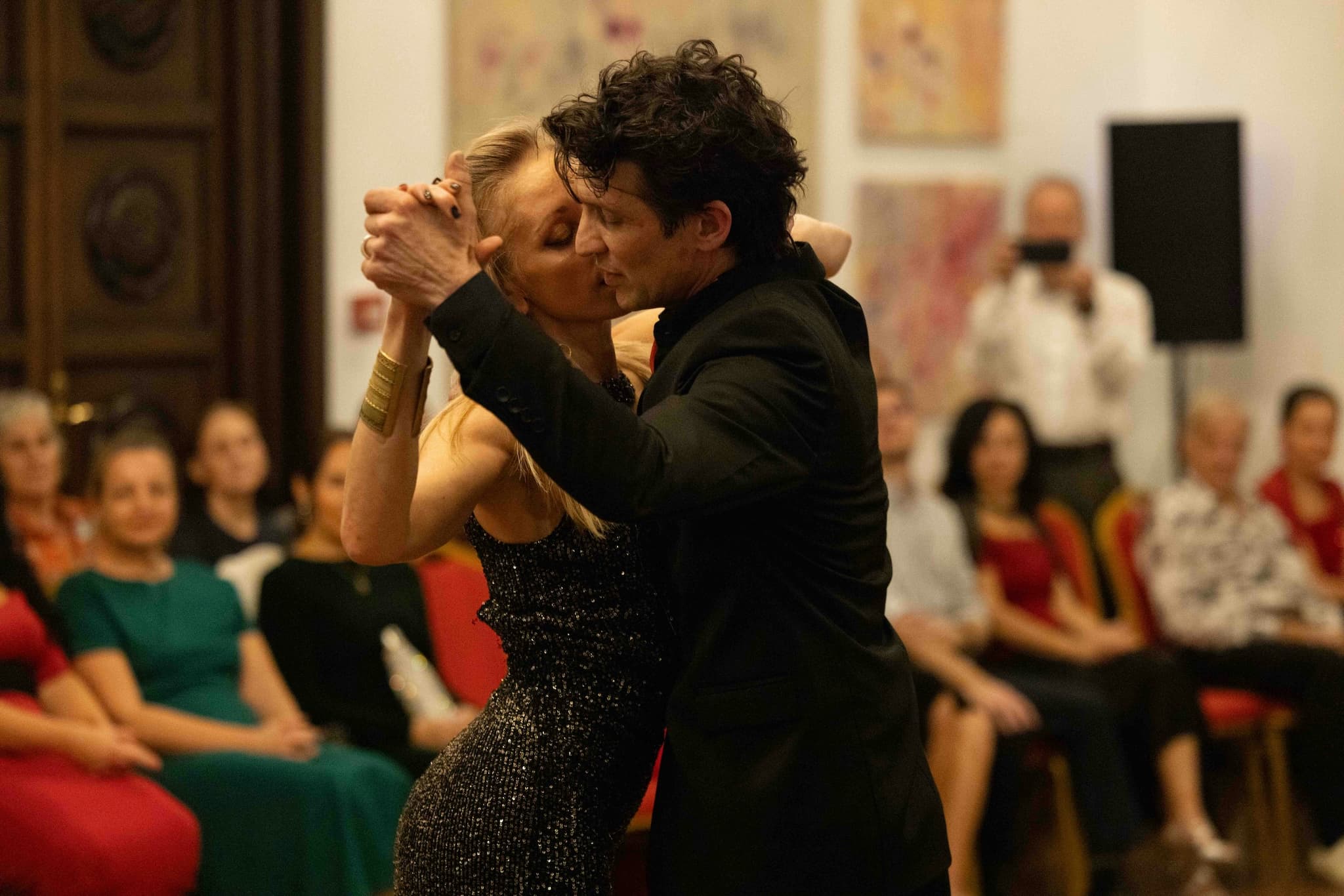
Short answer: A milonga is a tango dance night where locals and visitors dance themselves, not a show you watch. For a first time, go to La Viruta in Palermo (Wednesday, Friday or Sunday): you take a class for your level at 10 pm and stay for the dancing. Most milongas don’t need a reservation, start late and are best paid in cash at the door. Skip the online “milonga experiences” that sell for around USD 100.
Last updated: November 2026
I took an introductory tango class myself, and after that I mostly watched. And that is the beauty of a milonga: you can just join in. Next to you are locals who have danced for years, professionals who drop by, and travelers who come to improve their tango or simply have fun. My own milonga night was at La Catedral in Almagro, and that’s where I felt the difference with a show: nobody performs for you, everyone just dances.
For this guide I combined what I know from living in Buenos Aires with the most recent Google reviews of every milonga below (November 2026). That’s how I made my top 5 for a first visit.
Read more: The best tango shows in Buenos Aires, reviewed
| My Quick Recommendations for your travel to Buenos Aires!👇 🏡 Find the Best and Most Affordable Stays in Buenos Aires here! 🚗 Rental Car: The top Argentina & Budget companies are listed on this page. 📱 Connect: Stay connected, and get a 5% automatic discount, with the Argentina eSim! 💃 The Best tango show ticket prices available in Buenos Aires. |
Milonga or Tango Show: What’s the Difference?
A tango show is a performance. You’re welcomed at the door, taken to your table and served dinner or a drink, and professional dancers perform on stage with a live orchestra. It’s polished, and for many people it’s the best way to see tango at its finest.
A milonga is the opposite: low-key, down to earth and local. There’s no stage. Everyone dances on the same floor, from beginners to dancers who have done this for 40 years. You pay a few thousand pesos at the door, order your own drink, and you’re part of it.
My advice? Do both. See a show to understand what tango can be, then go to a milonga to feel it yourself. Several shows include a tango class before the show, such as Michelangelo, La Ventana, Tango Porteño, Aljibe and Gala Tango. How these classes work: read my guide to tango classes before a show. Compare all tango shows and prices here.
My Top 5 Milongas for a First Visit
| # | Milonga | Best for | Reservation | Google rating |
|---|---|---|---|---|
| 1 | La Viruta (Palermo) | Beginners: class first, then dance | Not needed | 4.7 (480+ reviews) |
| 2 | Maldita Milonga (San Telmo) | Live orchestra and a late show | Usually not | 4.6 (170+) |
| 3 | Yira Yira at Club Gricel (San Cristóbal) | The best dance floor, elegant and clean | Yes, via WhatsApp | 4.6 (750+) |
| 4 | La Catedral (Almagro) | Bohemian atmosphere, cheap classes | Not needed | 4.3 (2,300+) |
| 5 | Salón Canning (Palermo) | Traditional and elegant, to watch | Yes | 4.5 |
1. La Viruta Tango Club: The Best Milonga for Beginners
Where: Armenia 1366, Palermo. When: Wednesday, Friday and Sunday (doors open at 8 pm).
La Viruta has been around for 30 years and calls itself “kilometer zero of Argentine tango”. It’s my first tip for a first milonga, because the class and the dancing are in one evening:
- Wednesday: tango class at 10 pm, dancing from 11 pm.
- Friday: tango class at 9:45 pm, a show at 11 pm, then dancing.
- Sunday: milonga class at 8:30 pm, tango class at 10 pm, dancing from 11 pm.
The classes are for all levels, from complete beginners to advanced. In the recent reviews, the patient teachers come up more than anything else, also for people who say they can’t dance at all. The hall is big, with plenty of tables, a full menu and cheap drinks. And after 1 am, the really good couples take the floor.
Reservation: not needed. Many blogs say you have to book, but La Viruta itself says: just come. Only on festival nights or when Monday is a public holiday, it’s better to ask first.
Keep in mind: it gets busy, and on other nights there’s also salsa, rock and bachata. A mid-2026 deal with dinner, classes, a live show and dancing was ARS 25,000. Check their Instagram (@lavirutatangoclub) for the current program.
2. Maldita Milonga: Live Orchestra and a Show
Where: Perú 571, San Telmo. When: Thursday, class at 9 pm.
Maldita Milonga is the place if you want to dance and watch. The evening starts at 9 pm with a class, in Spanish and English, with separate groups for beginners and intermediates. Around 11 pm the floor opens to everyone, with a live orchestra. Around midnight a professional couple performs a few dances.
Reviewers love the orchestra, the friendly owner and the fair prices (the empanadas get a special mention). Beginners stay in the middle of the floor, so you don’t get in the way of the experienced dancers.
Keep in mind: it’s small and gets crowded, the show often starts later than announced, and some locals find it a bit touristy. Programs change, so check their social media before you go.
3. Yira Yira at Club Gricel: The Best Dance Floor
Where: El Nuevo Gricel, La Rioja 1180. When: Friday, class at 7:30 pm (all levels), milonga from 9 pm to 3 am.
Club Gricel is a legendary tango hall, and reviewers keep calling its wooden floor the best in the city. The hall is clean, elegant and air-conditioned, there’s a buffet with homemade food, and the level of dancing is good. Perfect for a second milonga, or just to watch beautiful dancing. There’s discounted parking on the same block (La Rioja 1132).
Reservation: yes. Send them a WhatsApp message to book your table (the number is on their website).
Pay in cash. Otherwise they only accept MercadoPago or a bank transfer, which are local payment methods that most travelers can’t use. Drinks are on the expensive side.
More info: yirayiramilonga.com.ar
4. La Catedral Club: Bohemian, but Bring Cash
Where: Sarmiento 4006, Almagro. When: Tuesday to Saturday.
La Catedral is the most famous alternative milonga in Buenos Aires: a huge old hall with a wooden roof, art on the walls and a relaxed, bohemian crowd. It’s also the milonga I went to myself. With over 2,300 Google reviews, it’s also the best-known. There are tango classes every evening at 6:30, 8 and 9:30 pm, and the dancing goes on late. On Saturdays at 6:30 pm there’s a class in English for all levels, and you don’t need a partner.
Reservation: not needed. La Catedral says it clearly: all activities are without reservation.
Keep in mind: in the most recent reviews, several visitors complain about the reception at the door: cash only and prices that weren’t clear. Bring cash in pesos, and ask the price before you pay. The building is also showing its age. The atmosphere is still what people love.
More info: lacatedralclub.com
5. Salón Canning: Traditional and Elegant
Where: Av. Scalabrini Ortiz 1331, Palermo. When: A Puro Tango, Saturday and Sunday from 6 pm (milonga and classes).
Salón Canning is one of the historic tango halls of Buenos Aires. It’s traditional, elegant and full of history, and you dress up: a nice dress or shirt, and your best shoes. The crowd is mostly experienced and over 40, and the floor gets very crowded. That’s why I recommend it more to watch than for your first dance.
Reservation: yes. For A Puro Tango you book your entry in advance (link on their Instagram, @a.puro.tango).
Good to know: older blogs still mention the famous Parakultural milonga at Canning. According to recent reviews, that’s no longer the case.
Also Good to Know: More Milongas by Day
- Monday, Muy Lunes: La Comedia Tango, Rodríguez Peña 1074. Class 8:30–10 pm, milonga until 4:30 am. Entry ARS 7,000 including the class (November 2026). You can reserve via WhatsApp (link on their Instagram).
- Monday afternoon, Champagne Tango: a matinée milonga, at their new venue at Riobamba 345 (between Sarmiento and Corrientes). Ideal if you don’t want a late night. Check the hours on @champagnetango.
- Tuesday, Muy Martes: La Paz Arriba, Av. Callao 1082. Class 8:30–10 pm, milonga until 4 am, with a kitchen, cocktails and a terrace. Entry ARS 7,000 including the class. Reservations via WhatsApp.
Milongas by Day of the Week
| Day | Where to go |
|---|---|
| Monday | Champagne Tango (afternoon), Muy Lunes (night) |
| Tuesday | La Catedral, Muy Martes |
| Wednesday | La Viruta, La Catedral |
| Thursday | Maldita Milonga, La Catedral |
| Friday | La Viruta (with show), Yira Yira at Club Gricel, La Catedral |
| Saturday | La Catedral (class in English), Salón Canning |
| Sunday | La Viruta, Salón Canning |
Programs change. Always check the milonga’s own Instagram on the day you go.
Watch Out: Fake “Milonga Experiences” Online
When you search for milongas, you’ll find more and more websites that look like a milonga’s own site, or that sell a “milonga experience” as a tourist package. Many are generated with AI. You can recognize them by a booking calendar at the bottom, the kind you know from GetYourGuide, and prices of around USD 100 per person.
You can book those, but it’s a pre-arranged trip to a pre-arranged milonga, and the atmosphere is completely missing. That’s not what a milonga is about. A real milonga costs a few thousand pesos, you pay at the door, and the real information is on the milonga’s own Instagram or website.
Milonga Etiquette for First-Timers
- The cabeceo: in traditional milongas, you don’t walk up to someone to ask for a dance. You make eye contact and nod. A nod back means yes. Looking away means no, and nobody is offended.
- Tandas and cortinas: the DJ plays sets (tandas) of 3 or 4 songs in the same style. You dance the whole tanda with one partner. Then a short piece of non-tango music plays (the cortina), and everyone leaves the floor.
- “Gracias” means you’re done: say thank you only at the end of the tanda. Saying it after one song means you’d like to stop.
- Follow the flow: couples move counter-clockwise around the floor. As a beginner, stay in the middle and don’t cross the floor.
- Shoes and clothes: shoes with a smooth leather or suede sole are best; rubber sneakers stick to the floor. Smart casual is fine at most milongas. At Salón Canning, dress up.
- Just watching is fine: you can sit at a table, order a drink and enjoy the dancing. Nobody expects you to dance.
Practical Tips
- Pay in cash. Milongas are down to earth: bring pesos for the entry and your drinks.
- Go late. Classes start around 8 to 10 pm, the dancing really starts after 11 pm, and many milongas go on until 3 or 4 am.
- Food and drinks: most milongas have a bar, and several serve food, from empanadas to a full menu or buffet.
- Getting home: take a taxi or Uber late at night. Read my tips for taxis and Uber and Cabify.
- Take a class first: a beginner’s class before the milonga makes your first dance a lot easier. More options in my guide to tango classes in Buenos Aires.
FAQ: Milongas in Buenos Aires
What is a milonga?
A milonga is a social tango dance night. Unlike a tango show, there is no stage: locals and visitors dance on the same floor, often after a class for beginners.
Do I need to book a milonga in Buenos Aires?
Usually not. La Viruta, La Catedral and most other milongas work without a reservation. Salón Canning (A Puro Tango) and Yira Yira at Club Gricel are exceptions: there you book in advance. Muy Lunes and Muy Martes also take reservations via WhatsApp.
Which milonga is best for beginners?
La Viruta in Palermo. On Wednesday, Friday and Sunday you take a class for your level and stay for the dancing afterwards, without a reservation.
How much does a milonga cost?
A few thousand pesos at the door, often including a class. Muy Lunes and Muy Martes charged ARS 7,000 in November 2026. Pay in cash. Be careful with online milonga packages of around USD 100: that is not the real milonga experience.
Can I go to a milonga alone or just watch?
Yes. Many people come alone, and classes usually do not require a partner. You can also just sit at a table, order a drink and watch.
What should I wear to a milonga?
Smart casual is fine at most milongas. Wear shoes with a smooth sole, not rubber sneakers. At traditional halls like Salón Canning, people dress up.
Fixed price per vehicle · Free cancellation up to 24 h


